The Mirror Is Not the Enemy: In Defence of the British Fitting Room
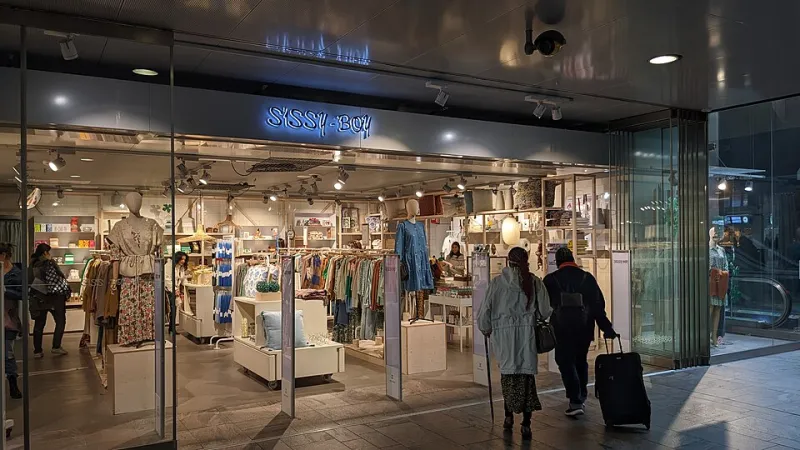
Photo: Donald Trung Quoc Don (Chữ Hán: 徵國單) - Wikimedia Commons - © CC BY-SA 4.0 International.(Want to use this image?)Original publication 📤: --Donald Trung 『徵國單』 (No Fake News 💬) (WikiProject Numismatics 💴) (Articles 📚) 14:09, 17 September 2022 (UTC),
In 2026 you can buy a dress from a fifteen-second video, have it delivered by lunchtime and send it back by post if it looks wrong. You can virtual-try a pair of jeans, ask a chatbot for styling advice and let a recommendation engine tell you what people like you are wearing. The fitting room should be obsolete. It is not. The British high-street fitting room remains the most honest style test we have, and we should stop pretending otherwise.
The lighting is a reality check, not a glow-up
Let us be honest about the lighting. It is fluorescent, slightly green and designed by someone who has never been told they look well. The mirror is often positioned at an unflattering angle. The curtain does not quite meet. It is not a glamorous experience. That is precisely why it works. Online, you can angle a ring light, stand in golden hour and convince yourself that a dress is perfect because the model looks amazing in it. In the fitting room, you see the hem, the shoulder seam, the way the fabric creases when you sit down. If it only works in golden hour, it does not work.
A queue is a focus group of one
There is something deeply democratic about the fitting room queue. You see people of different sizes, shapes and styles waiting for a cubicle. You hear someone ask a stranger if a dress is too much. You watch a teenager emerge triumphant in a blazer and an adult reconsider a jumpsuit. The high street is not a private club. The fitting room is not curated by an algorithm. It gives you a fact: this zip does not do up. The mirror is not judging you. It is reporting.
Algorithms sell a mood. Fitting rooms sell a fit.
Recommendation engines are trained on clicks, not on your shoulders. They know you looked at a lace top three times and bought a pair of boots last month. They do not know that the lace top itches, that the sleeve is too long or that the colour makes you look like you have a cold. A haul video can make a thirty-pound dress look like a lifestyle. The fitting room asks a more useful question: can you sit down in it? If a piece needs three belts, two styling hacks and a prayer, leave it on the rail. Trust your own taste. It is the only algorithm worth training.
The piece that makes you stand taller
Sometimes the right piece is not the trend piece. It is the coat that fits at the shoulder. The jeans that do not gape at the back. The dress that makes you stop slouching. That reaction is data. It is better than a five-star review, because it is yours. The fitting room gives you a private moment to notice it. You walk out of the cubicle, catch your reflection and think: yes, that is me. Not me as imagined by a brand. Not me as sold by a stranger on the internet. Me.
The flaws are real
We should not romanticise the fitting room. It can be inaccessible, understaffed and badly lit. The mirrors can make everyone feel strange. The queues can be long enough to break a spirit. Some shops still treat sizing like a dare. We should demand better. But the answer is not to abandon the physical test altogether. Online returns are not free for your time, your wallet or the planet. The fitting room is not a temple. It is a tool. And like any tool, it works best when you know what you are using it for.
Go in with a limit
Do not take thirty things into a cubicle. Take three. Try the maybe. Look at the back. Sit down. Walk. Check the sleeves. If you feel taller, that is the one. If you feel like you are wearing a costume, put it back. The algorithm can keep its mood board. The mirror has the receipts.